    public static String getString(Throwable t) {
        StringWriter sw = new StringWriter();
        t.printStackTrace(new PrintWriter(sw));
        return sw.toString();

    }
You may like
public static String getString(Throwable t) { StringWriter sw = new StringWriter(); t.printStackTrace(new PrintWriter(sw)); return sw.toString(); }
public class ThrowableEx {
 static void print()throws Throwable{
  try{
   int a = 10/0;
  }
  catch(ArithmeticException e){
   Throwable t1 = new Throwable();
   t1.initCause(e);
   throw t1;
  }
 }

 public static void main(String args[]){
  Throwable t1 = new Throwable();
  try{
   print();
  }
  catch(Throwable t){
   System.out.println("Exception \t\t Cause");
   System.out.println(t + "\t" + t.getCause());
  }
 }
}
Exception Cause
java.lang.Throwable java.lang.ArithmeticException: / by zero
public class ThrowableEx {
 static void print()throws Throwable{
  try{
   int a = 10/0;
  }
  catch(ArithmeticException e){
   Throwable t1 = new Throwable("Divide by zero exception");
   throw t1;
  }
 }

 public static void main(String args[]){
  Throwable t1 = new Throwable();
   try{
    print();
   }
   catch(Throwable t){
    System.out.println(t);
   }
 }
}
java.lang.Throwable: Divide by zero exception
public class ThrowableEx {
 static void print()throws Throwable{
  try{
   int a = 10/0;
  }
  catch(ArithmeticException e){
   Throwable t1 = new Throwable("Divide by zero exception", e);
   throw t1;
  }
 }

 public static void main(String args[]){
  Throwable t1 = new Throwable();
  try{
   print();
  }
  catch(Throwable t){
   System.out.println(t.getMessage() +"\t" + t.getCause());
  }
 }
}
Divide by zero exception java.lang.ArithmeticException: / by zero
public class ThrowableEx {
 static void print()throws Throwable{
  try{
   int a = 10/0;
  }
  catch(ArithmeticException e){
   Throwable t1 = new Throwable(e);
   throw t1;
  }
 }

 public static void main(String args[]){
  Throwable t1 = new Throwable();
  try{
   print();
  }
  catch(Throwable t){
   System.out.println(t);
  }
 }
}
java.lang.Throwable: java.lang.ArithmeticException: / by zero
class CheckedEx extends Throwable{
 CheckedEx(String s){
  super(s);
 }

 CheckedEx(){

 }

 void print()throws CheckedEx{
  throw new CheckedEx("I am checked Exception");
 }
}
class ThrowableEx{
 public static void main(String args[]){
  CheckedEx obj = new CheckedEx();
  obj.print();
 }
}
ThrowableEx.java:4: error: unreported exception CheckedEx; must be caught or declared to be thrown
obj.print();
^
1 error
class ThrowableEx{
 public static void main(String args[])throws Throwable{
  CheckedEx obj = new CheckedEx();
  obj.print();
 }
}
Exception in thread "main" CheckedEx: I am checked Exception
 at CheckedEx.print(CheckedEx.java:12)
 at ThrowableEx.main(ThrowableEx.java:4)
class ThrowableEx{
 public static void main(String args[]){
  CheckedEx obj = new CheckedEx();
  try{
   obj.print();
  }
  catch(CheckedEx e){
   System.out.println("Exception occured " + e);
  }
 }
}
Exception occured CheckedEx: I am checked Exception
class ThrowableEx{
 public static void main(String args[]){
  CheckedEx obj = new CheckedEx();
  try{
   obj.print();
  }
  catch(CheckedEx e){
   System.out.println("Stack trace is ");
   e.printStackTrace(System.out);
  }
 }
}
Stack trace is
CheckedEx: I am checked Exception
 at CheckedEx.print(CheckedEx.java:12)
 at ThrowableEx.main(ThrowableEx.java:5)
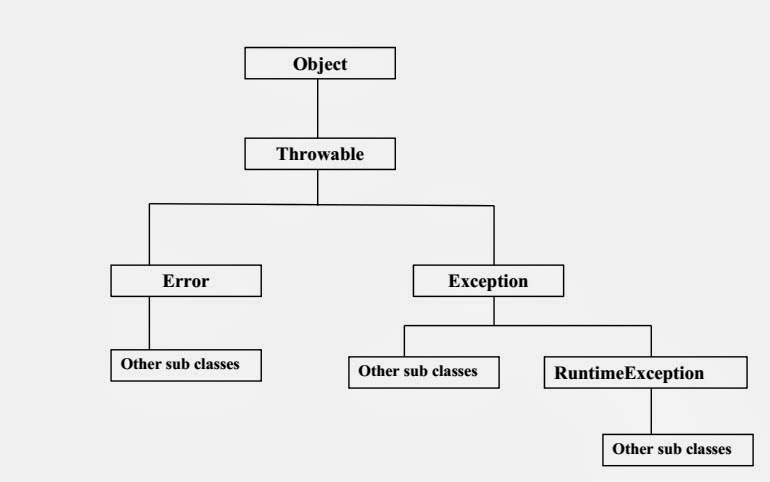
import java.io.*;

class MyResource{
 String name;

 void exception1(){
  throw new RuntimeException("I am exception 1");
 }

 void exception2(){
  throw new RuntimeException("I am exception 2");
 }

 void exception3(){
  throw new RuntimeException("I am exception 3");
 }

 void exception4(){
  throw new RuntimeException("I am exception 4");
 }
}
import java.io.*;

class SuppressEx{

 static Throwable suppressed = new Throwable();

 static MyResource obj1 = new MyResource();

 static void throwFirst(){
  try{
   obj1.exception1();
  }
  catch(Exception e){
   suppressed.addSuppressed(e);
   throwSecond();
  }
 }

 static void throwSecond(){
  try{
   obj1.exception2();
  }
  catch(Exception e){
   suppressed.addSuppressed(e);
   throwThird();
  }
 }

 static void throwThird(){

  try{
   obj1.exception3();
  }
  catch(Exception e){
   suppressed.addSuppressed(e);
   obj1.exception4();
  }
 }

 public static void main(String args[])throws Exception{
  try{
   throwFirst();
  }
  catch(Exception e){
   System.out.println(e);
  }

  System.out.println("--------------------------");
  System.out.println("Suppressed Exceptions are");
  System.out.println("--------------------------");

  Throwable[] suppressedExceptions = suppressed.getSuppressed();

  for(int i=0; i < suppressedExceptions.length; i++){
   System.out.println(suppressedExceptions[i]);
  }
 }
}
java.lang.RuntimeException: I am exception 4
--------------------------------
Suppressed Exceptions are
--------------------------------
java.lang.RuntimeException: I am exception 1
java.lang.RuntimeException: I am exception 2
java.lang.RuntimeException: I am exception 3
class Stack{
 int size;

 Stack(int size){
  if(size < 0 )
   throw new NegativeArraySizeException("Stack size is less than zero");
  if(size == 0)
   throw new NegativeArraySizeException("Stack size is zero");
  this.size = size;
  System.out.println("Stack created with size " + size);
 }
}
class StackTest{
 public static void main(String args[]){
  Stack s1;

  try{
   s1 = new Stack(-10);
  }
  catch(Exception e){
   System.out.println(e);
  }

  try{
   s1 = new Stack(0);
  }
  catch(Exception e){
   System.out.println(e);
  }

  try{
   s1 = new Stack(10);
  }
  catch(Exception e){
   System.out.println(e);
  }

 }
}
java.lang.NegativeArraySizeException: Stack size is less than zero
java.lang.NegativeArraySizeException: Stack size is zero
Stack created with size 10

